The problem isn't the technology. It's the accountability gap underneath it.
Maritime operators are adopting AI faster than they are governing it. Collision-avoidance systems, GNSS-loss vision backups, fatigue monitoring, and route optimization are moving from pilot projects to standard equipment. The capability is real, and in many cases it works: across one fleet of more than 1,000 vessels, operators reported roughly a 50% reduction in close-encounter events after deploying AI decision-support tools.
But capability is not the question a board, an insurer, or a regulator will ask you first. Their question is narrower and harder: When this system makes a safety-critical decision, who is accountable, how do you know it worked, and can you prove it?
That is a governance question, not an engineering one. And in 2026 it has quietly become the factor that determines whether a maritime AI deployment is an asset or a liability.
Three pressures are converging at once
1. The operating environment is getting harder, not easier. Human error still contributes to an estimated 75% of maritime accidents, and the structural conditions are worsening: the world merchant fleet reached roughly 109,000 vessels in 2025 — the highest ever recorded — while a shortage of licensed officers has left leaner, less experienced bridge teams managing denser traffic. Layered on top is a sharp rise in GNSS jamming and spoofing; one monitoring firm reported a 50% surge in satellite interference incidents affecting global shipping in a single month of 2026. AI is being deployed precisely into these gaps — making or shaping decisions at the exact moments when the stakes are highest.
2. The regulators have arrived. The International Maritime Organization has moved autonomous and AI-assisted operations from experimental tolerance to formal governance. Its goal-based MASS Code — addressing safety management, communication reliability, cybersecurity, and human oversight — is aimed at adoption in 2026, giving the first internationally recognized signal of what oversight expectations will look like across the life of a vessel ordered today. The IMO's legal committee is separately working through what “master” and “crew” mean when a system is in the loop, and how liability and insurance attach when they are.
3. The underwriters are pricing governance directly. This is the pressure most operators underestimate. Insurers now treat AI governance as a rateable risk factor, not a soft nicety. More than 90% of insurance decision-makers consider AI-driven incidents a material concern, and underwriters increasingly expect demonstrable maturity: documented model purpose, human-in-the-loop controls, testing evidence, audit trails, and explainability. Those who can show it secure cleaner terms and greater capacity; those who cannot are self-insuring a risk they can't fully see. As marine insurance shifts toward dynamic, data-driven underwriting, the quality of your AI governance and data trail increasingly is your premium.
In maritime AI, the governance is now the product. A collision-avoidance system without a defensible oversight, testing, and accountability framework around it is not a safety asset — it is an uninsured, potentially unregulated, and legally ambiguous decision-maker sitting on your bridge.
Where a controls lens changes the conversation
Most maritime AI discussion is led by technologists explaining what the systems can do. The questions that actually determine risk, insurability, and regulatory standing are the questions a fraud examiner and a CPA are trained to ask — because they are, at their core, questions about controls, evidence, and accountability:
- Model purpose and scope. Is it documented what each system is for, what it is explicitly not for, and who approved that scope? Undocumented scope creep is where liability hides.
- Human oversight that is real, not nominal. The control is whether the human has the information, time, and authority to override — and whether overrides are logged. Alert fatigue from poorly tuned systems is a governance failure, not a UX complaint.
- Evidence and audit trail. When a review or an insurer asks what the system recommended, what the crew did, and why, can you answer with records rather than recollection?
- Testing and calibration discipline. How is false-alert performance measured and tuned over time? Noise degrades trust and safety simultaneously.
- Third-party and vendor accountability. Most maritime AI is bought, not built. Liability frameworks place accountability on operators and developers first, making vendor governance a core control, not a procurement afterthought.
- Board-level visibility. Regulators and courts increasingly expect leadership to know where AI is used and demonstrate that model-failure and dependency risks were considered. “We didn't know how it worked” is no longer a defense.
None of these are technology questions. Every one is a controls question — and controls are where a CPA/CFE perspective is built to operate.
Why this lands hard in the Philippines
For the Philippine maritime sector, this is not an abstract global trend — it sits directly on top of the country's core strength. The Philippines is one of the world's largest suppliers of seafarers, and its credibility rests on a training-and-certification system that flag states worldwide trust. The country holds STCW “White List” status, meaning the IMO has verified that Philippine maritime training meets the international standard — which is precisely why certificates issued by Philippine institutions are accepted abroad. That status is neither automatic nor permanent; it is earned continuously through demonstrable training quality and verification.
Two developments make governance especially timely here. First, training requirements are already tightening: from January 2026, updated STCW rules made anti-harassment and anti-violence training mandatory, and regulators have flagged an emerging need to train seafarers on the safe operation of ships using alternative fuels and new technologies. Second, the scale is expanding under national policy — one government institution alone trained a record 22,741 seafarers in 2025, and the sector is positioned to help fill a global officer shortfall projected at 26,000 by 2026.
Here is the connection that matters. As vessels adopt AI-assisted navigation, collision-avoidance, and new-technology systems, the competency question moves onshore: who trains crews to operate and oversee these systems, and how is that training's adequacy governed, documented, and proven? For Philippine training institutions and navigation providers, AI governance is not a threat to the existing model — it is the next layer of value on top of it. The provider who can say “our navigation training doesn't just teach the system, it builds the human-oversight competency an underwriter and a flag state will now expect” is selling something more durable than a course. It is selling defensibility. And in a market whose entire competitive advantage depends on trusted, verifiable competency, defensibility is the product.
A practical governance starting point
For a maritime tech provider, insurer, or fleet operator beginning to formalize AI governance, a defensible program tends to start with the same core elements:
- An AI system inventory. A living register of every AI system in use or embedded in equipment — its purpose, decision authority, and owner. You cannot govern what you have not enumerated.
- A risk classification per system. A route optimizer and a collision-avoidance system belong in different oversight tiers. Use proportionality deliberately rather than by accident.
- Documented human-oversight design. For each higher-risk system: who oversees it, what they see, what they can override, and how those actions are logged.
- An evidence and audit-trail standard. What is captured, where it is stored, how long it is retained, and how it can be produced for a review, underwriter, or regulator.
- Vendor governance and accountability mapping. Documented due diligence, contractual accountability, and a clear map of where liability sits across the value chain.
- Board reporting and a review cadence. Governance that is demonstrable — reviewed, minuted, and updated — rather than assumed.
This is deliberately not a technology roadmap. It is a controls framework — and, not coincidentally, the exact structure an underwriter wants to see and the posture the emerging regulatory regime rewards.
The bottom line
Maritime AI has crossed from novelty to infrastructure. A harder operating environment, an arriving regulatory framework, and an insurance market that now prices governance directly have made one thing true: the deciding factor is no longer whether you have AI, but whether you can govern it, evidence it, and defend it.
The operators and providers who treat AI governance as a controls discipline — inventoried, classified, documented, audited, and accountable — will find themselves on the right side of every one of those pressures. Those who treat it as a technology feature will discover, at the worst possible moment, that a system nobody governs is a risk nobody underwrote.
Bringing AI Into Maritime Operations — or Governing What's Already There?
An independent, controls-based look at where your AI governance stands.
WhatsApp Monte Directly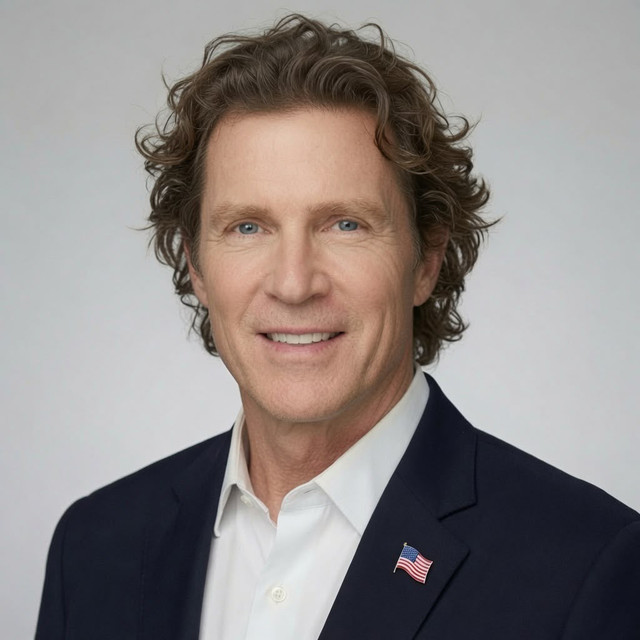
Monte Fisher, CPA, CFE
Monte Fisher is a Certified Public Accountant and Certified Fraud Examiner who works with organizations to build and audit AI governance frameworks through a risk-and-controls lens. He is the founder of Fisher Governance and the creator of the FAIG — Fisher AI Implementation Gauge — a governance framework applied across payment processing, aerospace, enterprise, and maritime AI implementations. This article is general information, not legal, insurance, or regulatory advice; specific obligations depend on jurisdiction, flag state, and the systems in use.